

Canal Cleaning Robot.

The Challenge & Vision
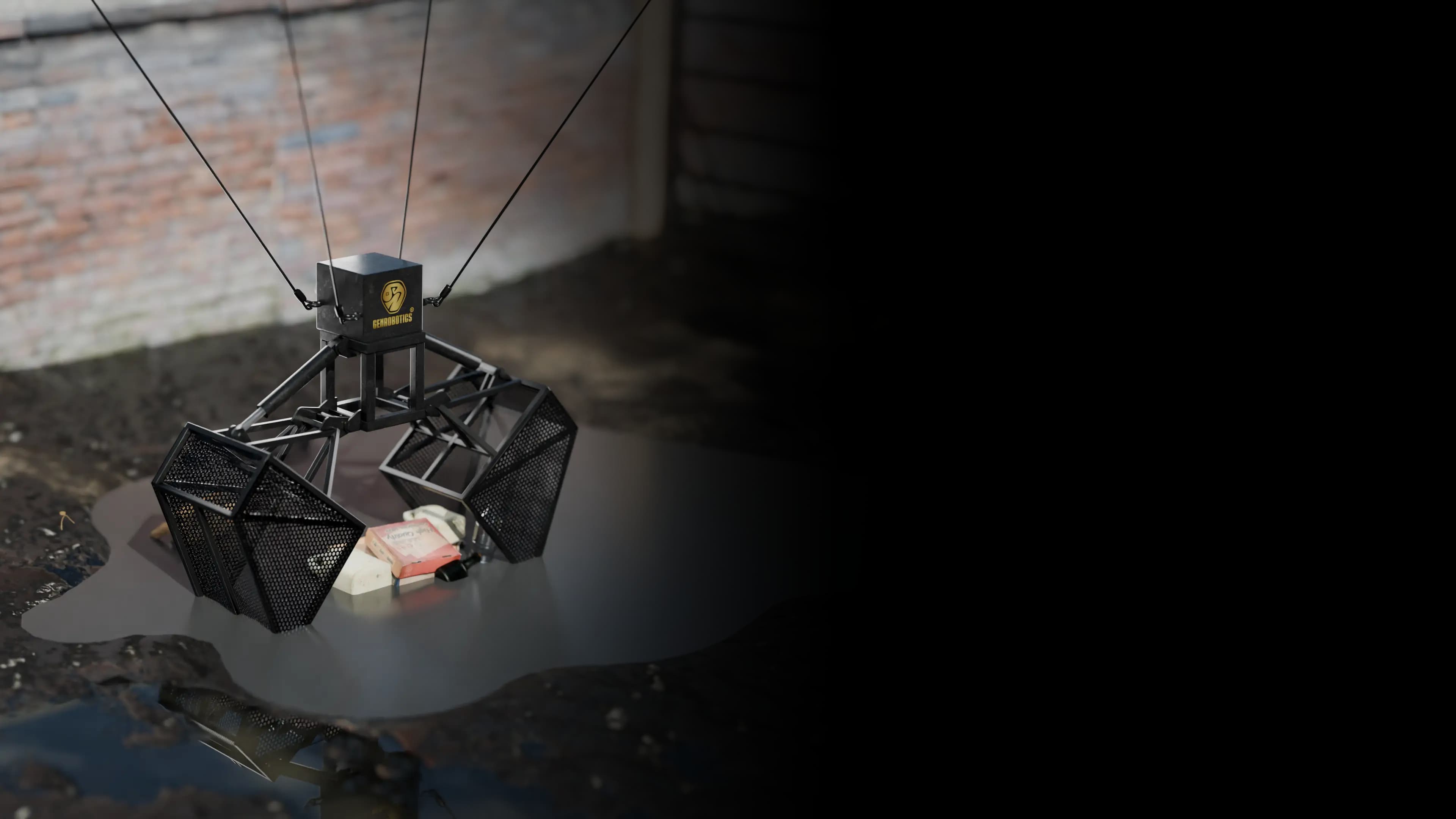
G-SPIDER is a mission-critical robotic solution designed to transform canal and waterway sanitation. Built on a Cable-Driven Parallel Robotic (CDPR) architecture, it enables autonomous, high-precision waste detection and removal in live canal environments, eliminating manual entry, reducing operational risk, and significantly improving cleaning efficiency.
Key R&D Breakthroughs:
- 1.AI-Powered Autonomous Cleaning: Operates independently using artificial intelligence to detect, assess, and remove waste without human intervention.
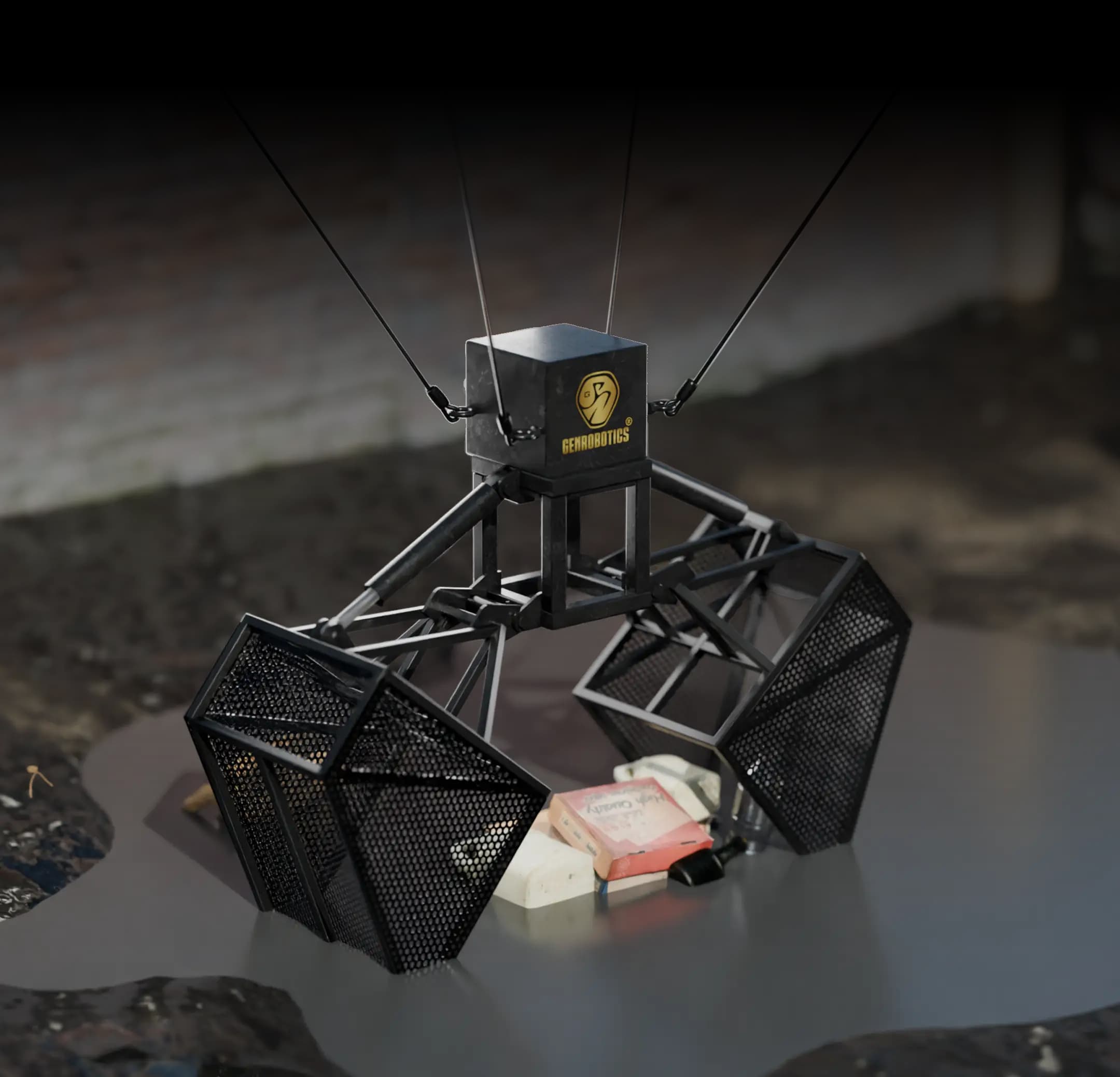
- 2.Cable-Driven Parallel Robotic (CDPR) Architecture: Suspended on cables, G-SPIDER moves precisely in all directions, covering canals of varying sizes safely and efficiently.
- 3.Biomimetic Claw Grabber: Designed like natural organisms, the claw securely grips and lifts debris of different shapes and sizes, adapting to water flow and canal structures.
- 4.Vision-Based Waste Detection: AI-enabled cameras and sensors identify the type, location, and quantity of debris in real time for targeted cleaning.
- 5.Five Degrees of Freedom: Provides precise movement and positioning, allowing the robot to reach difficult areas and perform complex cleaning paths.
- 6.Automated Trajectory Planning: Records and follows predefined paths, ensuring consistent coverage and repetitive cleaning cycles without supervision.
- 7.AI & Sensor-Based Operation: Continuously monitors the environment with sensors and AI, adjusting actions dynamically for safe, efficient, and fully automated cleaning.
Technical Specifications
Mobility
Cable-Driven Parallel Robotics (CDPR)
with spider-like or floatation supportCollection Capacity
TBD (High Volume)
Sensors
Sonar, Multi-Spectral Camera
Development Roadmap
G Spider is designed for environments with mixed terrain and highly variable conditions, requiring an iterative approach to mobility and sensing.
Phase 1
Hydrodynamic Modeling & Chassis Design (Current)
Optimizing leg geometry for amphibious movement and validating stability in variable water flow and sludge density.
Phase 2
Debris Collection & Vision Integration (Future)
Developing and refining efficient mechanical collection mechanisms and training the AI for waste classification in murky water conditions.
Phase 3
Multi-Modal Transition Testing (Future)
Ensuring reliable, autonomous transition between fully submerged, floating, and canal-bank traversal modes without human intervention.
Phase 4
Long-Range Autonomy (Future)
Implementing comprehensive, energy-efficient navigation and communications for fully autonomous missions across extended canal lengths.